
Start with the surgeon, not the slogan
Confirm that the clinician is an ophthalmologist and ask who performs the assessment, plans the treatment, operates and reviews you afterward. A strong doctor page should show verifiable training, affiliations, publications or professional profiles rather than unreferenced claims such as number one or guaranteed results.
Experience should be relevant to the procedure and platform being recommended. A large social following or a polished video can help you understand the clinic, but neither replaces medical credentials and a transparent consultation.
What ‘best LASIK surgeon in Cairo’ or ‘best LASIK surgeon in Egypt’ should mean
The phrases best LASIK surgeon in Cairo and best LASIK surgeon in Egypt are common search terms, not independently awarded medical titles. Use them to build a shortlist, then verify the surgeon’s ophthalmology training, refractive-surgery focus, current platform experience and personal role in assessment, operation and follow-up.
For Dr Mohamed Anis, the relevant published scope is his focus on refractive, lens and cataract surgery, including FemtoLASIK and other laser vision-correction procedures. That experience should be considered with your own scans and consultation rather than presented as proof of a number-one ranking.
A complete assessment should be visible in the process
LASIK screening is more than reading a glasses prescription. It commonly includes stable refraction, corneal topography or tomography, pachymetry, tear-film and eyelid assessment, pupil and centration considerations and an examination of the rest of the eye. Extra tests depend on age and findings.
Ask whether contact-lens wear or dry eye could affect measurements and whether scans will be repeated. The best recommendation may be FemtoLASIK, TransPRK, an implantable lens, continued glasses or no elective procedure.
Compare technology by exact name and role
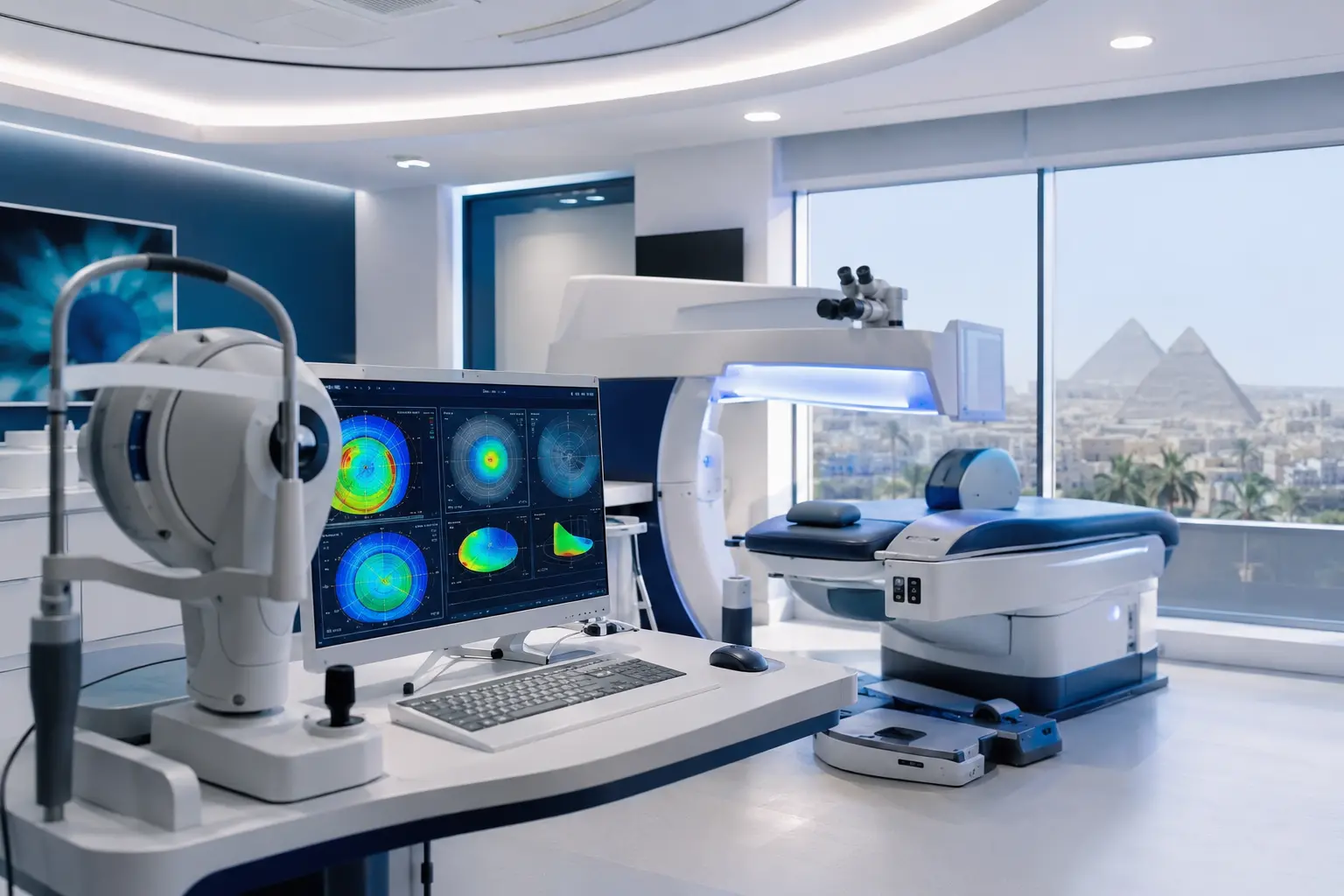
A femtosecond laser creates a flap; an excimer laser reshapes the cornea. Topographers, tomographers and aberrometers provide different planning data. Contoura is a specific WaveLight topography-guided workflow, while other platforms may offer different custom or optimized profiles.
Ask which machine performs each step and why its available profile fits your measurement. ‘Latest technology’ without a model, purpose or patient-selection explanation is not enough information.
Look for honest risk communication
A trustworthy clinic explains dryness, glare, halos, fluctuating vision, inflammation, infection, residual error, flap problems and rare ectasia in understandable language. It should describe expected symptoms separately from warning signs that need urgent review.
Be cautious with 100% safe, zero complications, permanent perfect vision or guaranteed 20/20. Modern refractive surgery can be highly effective in suitable eyes, but no elective operation is risk-free.
Compare the total package and follow-up
A headline fee may cover one eye or both and may exclude scans, surgeon fees, consumables, medication or follow-up. Request a written total and ask what happens if the operation is postponed after abnormal testing or if a residual prescription is found later.
A realistic range often helps patients compare more honestly than an unusually low starting figure. Cost matters, but it should come after the clinic has explained which procedure is medically appropriate.
Check local accountability
The clinic should publish a consistent name, physical Cairo address, telephone number, map link and appointment process. Know how to contact the team after hours for unexpected pain, redness, trauma or vision loss, and when the first postoperative examination occurs.
Patient education, bilingual information and real follow-up access improve decision quality. Testimonials can describe experience but cannot predict your medical outcome. Your records and consent should state the actual plan discussed.
Useful questions for your consultation
Use these prompts to keep the discussion connected to your measurements, risks and visual goals.
- Who will plan, perform and review my surgery?
- Can you explain my corneal maps?
- Which exact devices and profile will be used?
- What is included in the total quotation and follow-up?
Frequently asked questions
Which is the best type of LASIK?
There is no universal best. The appropriate access method and laser profile depend on corneal measurements, prescription, surface health, age and priorities.
Should I choose the cheapest clinic?
Compare the full quotation and clinical process. A low headline price is not useful if essential scans, surgeon care or follow-up are excluded.
Does the newest machine guarantee the best result?
No. Platform capability matters, but data quality, candidacy, planning, execution and healing all affect the outcome.
What is a good sign during consultation?
The surgeon explains your maps, alternatives, risks and reasons clearly—and is willing to postpone or decline surgery when measurements are unreliable or unsafe.
Medical sources and further reading
This article was reviewed against the following patient-information resources. Individual recommendations still depend on examination.