

Topography-guided laser planning

Contoura LASIK in Cairo

Contoura is a branded topography-guided LASIK workflow designed for compatible WaveLight technology. It uses detailed, repeatable corneal-surface measurements to guide the excimer-laser profile. It is one form of customized treatment—not a universal upgrade and not the right label for every custom LASIK plan.

Book on WhatsApp
Corneal laser correctionSimplified concept
CorneaLaser profileFocused light
Egyptian woman overlooking Cairo in an editorial image about visual freedom
A realistic goal of reducing dependence on glasses
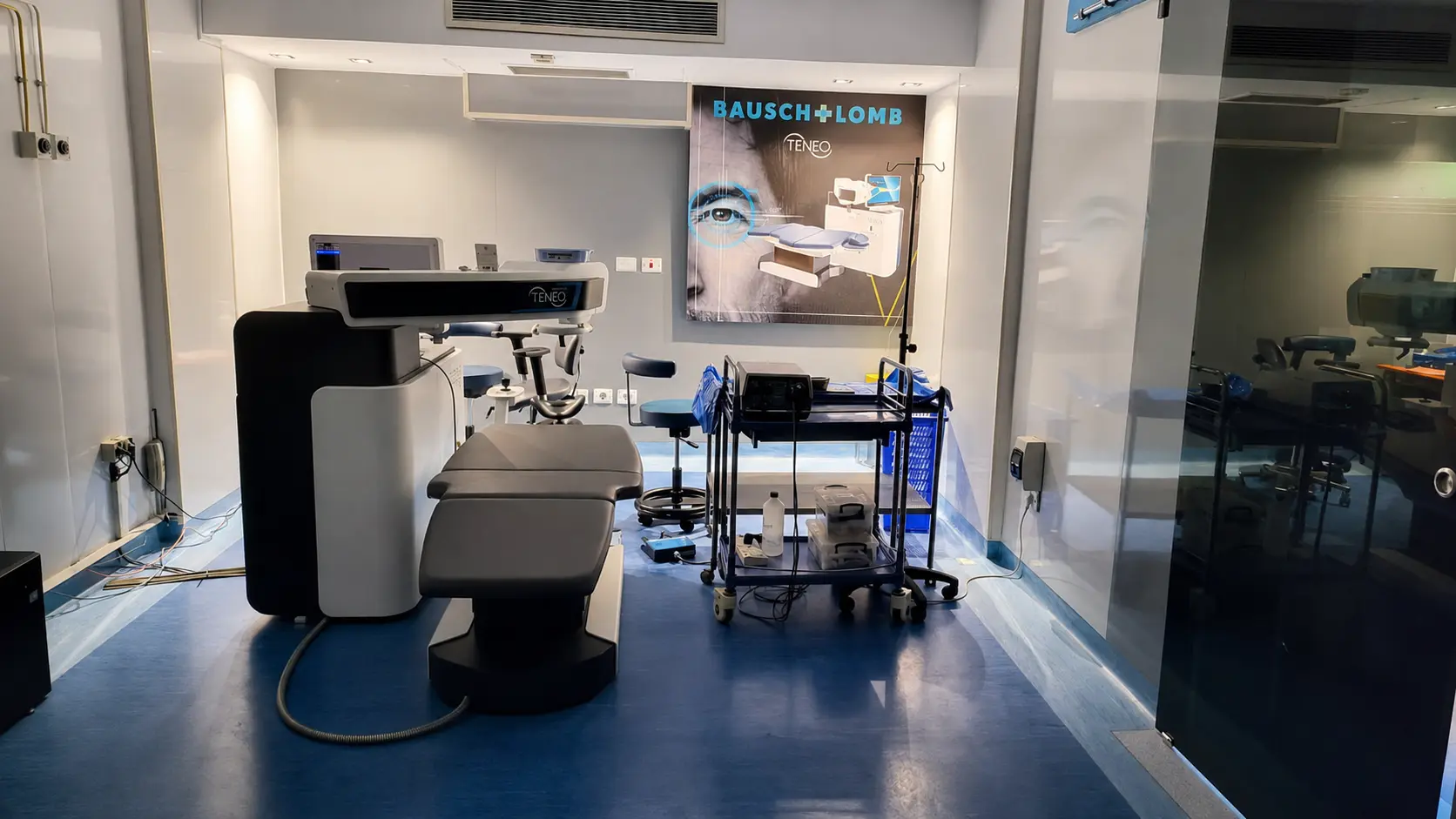
Bausch + Lomb TENEO excimer laser in the surgical theatre used by Dr Mohamed AnisActual surgical theatre
Where the procedure is performed

The surgical theatre and TENEO

This photograph shows the dedicated surgical centre where Dr Mohamed Anis performs laser vision-correction procedures; it is not a treatment room inside Cairo LASIK Clinic. Consultations, diagnostic assessment and follow-up take place at the clinic in Heliopolis.

The procedure and platform are confirmed after examination, not from a photograph or equipment name alone.

01

What does Contoura measure?

A compatible corneal topographer records thousands of elevation points across the front surface of the cornea. The treatment software uses reliable map data together with the refraction and clinical examination. A scan alone does not prove that treatment should be performed.

02

Contoura, wavefront-guided and optimized LASIK

Contoura is a specific topography-guided brand. Wavefront-guided planning measures the optical system of the eye, while an optimized profile is designed to preserve corneal shape during ordinary refractive correction. ‘Custom LASIK’ is the broader term; the most suitable profile depends on what the measurements actually show.

03

Who may be considered?

A patient still needs stable refraction, an acceptable corneal shape and thickness, adequate residual-tissue calculations, a healthy ocular surface and realistic expectations. Topography-guided planning is considered only when maps are consistent and the proposed profile is supported by the available platform.

  • Repeatable, good-quality corneal maps
  • A prescription within the approved range of the platform
  • No evidence of ectasia or another contraindication
  • A clear clinical reason for using a guided profile
04

Why it is not automatically better

More data are useful only when they are reliable and relevant. Dry eye, contact-lens warpage or poor fixation can distort corneal maps. A standard optimized treatment, another guided plan, TransPRK, a lens option or no surgery may be the safer conclusion for a particular eye.

05

Ask which platform and profile will be used

Contoura is not a generic synonym for every laser that uses a map. During consultation, ask for the exact diagnostic system, excimer platform and treatment profile, and whether the branded workflow is available for your case. The clinic should describe the real plan rather than using a technology name as a promise.

Cairo LASIK · Heliopolis

Find out which profile fits your measurements

Bring your previous glasses and contact-lens history. Final planning follows repeatable corneal imaging and a complete refractive examination.

Book on WhatsApp