
What makes RLE different from cataract surgery?
The surgical steps are broadly similar: the natural lens is removed and an intraocular lens is implanted. The difference is the indication. Cataract surgery treats a cloudy lens; RLE is primarily performed to change refractive dependence when the lens is still relatively clear.
Because the surgery is elective and the natural lens may still function, the benefit threshold and consent discussion should be particularly careful.
Who may consider it?
RLE may enter the discussion for presbyopic adults with high hyperopia, limited corneal-laser suitability or a desire to address both distance prescription and the ageing lens. Early lens changes can also shift the balance away from corneal laser.
Young patients with useful accommodation are usually poor candidates because removing the natural lens sacrifices focusing ability. High myopia requires special retinal-risk consideration.
Choosing the implanted lens
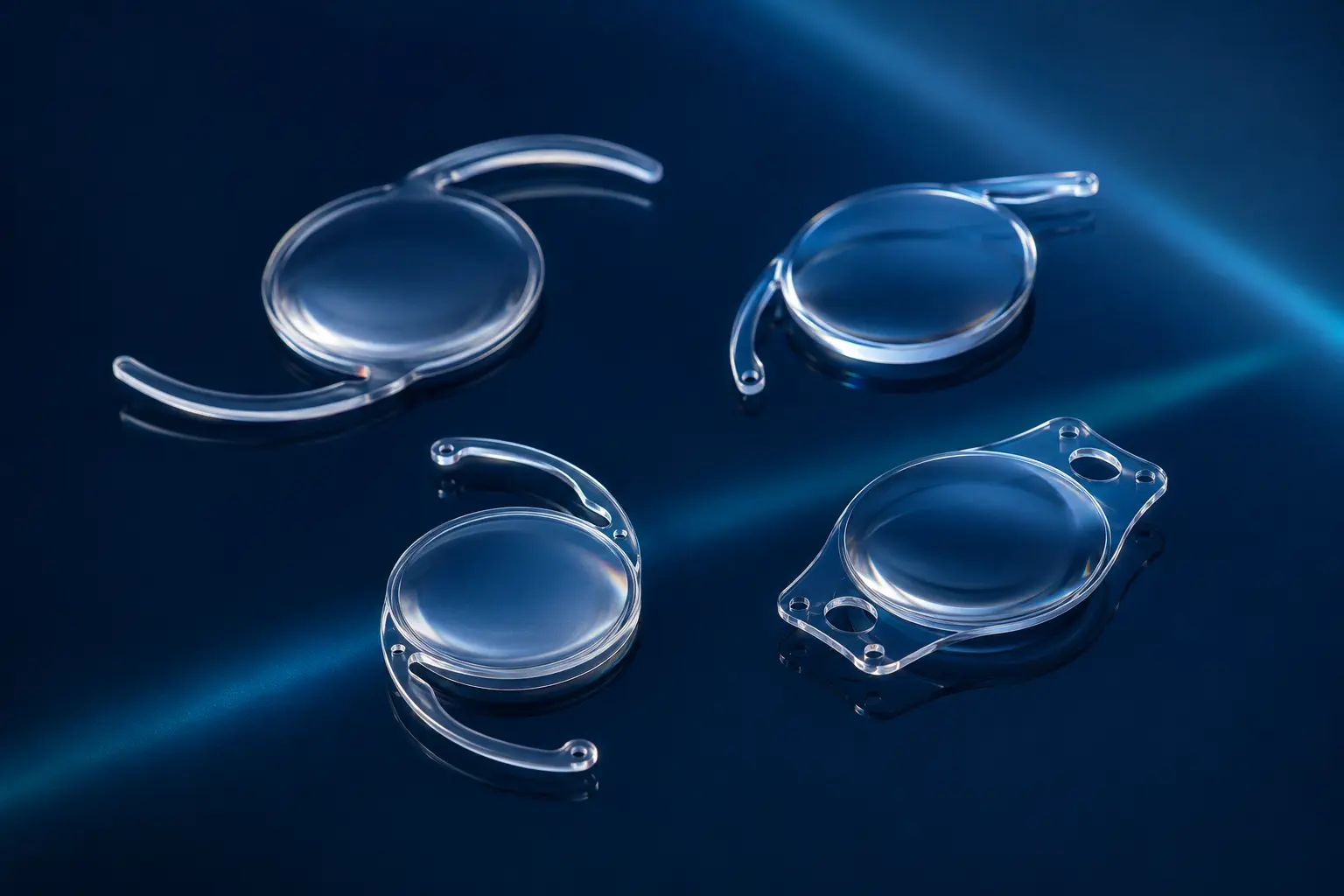
A monofocal IOL usually targets one focal range. Toric correction may reduce corneal astigmatism. Enhanced monofocal or EDOF designs can extend range, while multifocal or trifocal optics aim for more near vision with potential halos, glare and contrast trade-offs.
No lens reproduces a young natural lens. Ocular surface, corneal regularity, macula, optic nerve, lifestyle and tolerance for optical phenomena influence selection.
Benefits and limitations
RLE removes future cataract formation in the treated lens and can correct large refractive errors without corneal tissue removal. Bilateral planning can reduce dependence on distance and reading glasses depending on the lens strategy.
Residual prescription, need for glasses, dysphotopsia and imperfect near range remain possible. Neural adaptation takes time and lens exchange for dissatisfaction is another intraocular operation, not a simple reset.
Risks that deserve emphasis
Risks include infection, inflammation, pressure change, cystoid macular oedema, retinal tear or detachment, capsular problems, IOL decentration and posterior capsule opacification. Retinal risk may be especially relevant in long myopic eyes.
The decision should include a dilated retinal examination when indicated and a discussion of safer non-surgical alternatives. A premium lens label does not justify surgery by itself.
RLE, ICL or LASIK?
LASIK changes cornea and preserves the natural lens. ICL adds a phakic lens and preserves accommodation but needs internal-eye space and long-term monitoring. RLE removes the natural lens and changes the eye’s life-long lens strategy.
Age, lens clarity, accommodation, prescription, corneal measurements, chamber anatomy and retinal status narrow the choice. There is no single ladder where one procedure is automatically ‘more advanced.’
Useful questions for your consultation
Use these prompts to keep the discussion connected to your measurements, risks and visual goals.
- Why RLE rather than laser or ICL?
- What near and distance range is realistic?
- What is my retinal risk?
- What optical symptoms are associated with the proposed IOL?
Frequently asked questions
Will I ever get cataract after RLE?
The natural lens has been removed, so it cannot develop a cataract. Posterior capsule opacification can still cause later clouding and may need YAG laser.
Does RLE guarantee no glasses?
No. Lens design, target, healing and residual astigmatism affect dependence at different distances.
Is RLE reversible?
No. The natural lens cannot be restored. An implanted IOL can sometimes be exchanged, but that is another intraocular surgery.
Is RLE ideal for a young high myope?
Usually the loss of accommodation and retinal considerations make other options worth discussing first.
Medical sources and further reading
This article was reviewed against the following patient-information resources. Individual recommendations still depend on examination.
- U.S. FDA — Phakic intraocular lens risks
- National Eye Institute — Cataracts and intraocular lenses
- American Academy of Ophthalmology — Cataract surgery
- Alcon — Cataract lens portfolio
- Johnson & Johnson Vision — TECNIS Eyhance
- Johnson & Johnson Vision — TECNIS PureSee
- Bausch + Lomb Surgical — Cataract portfolio