
Two different optical strategies
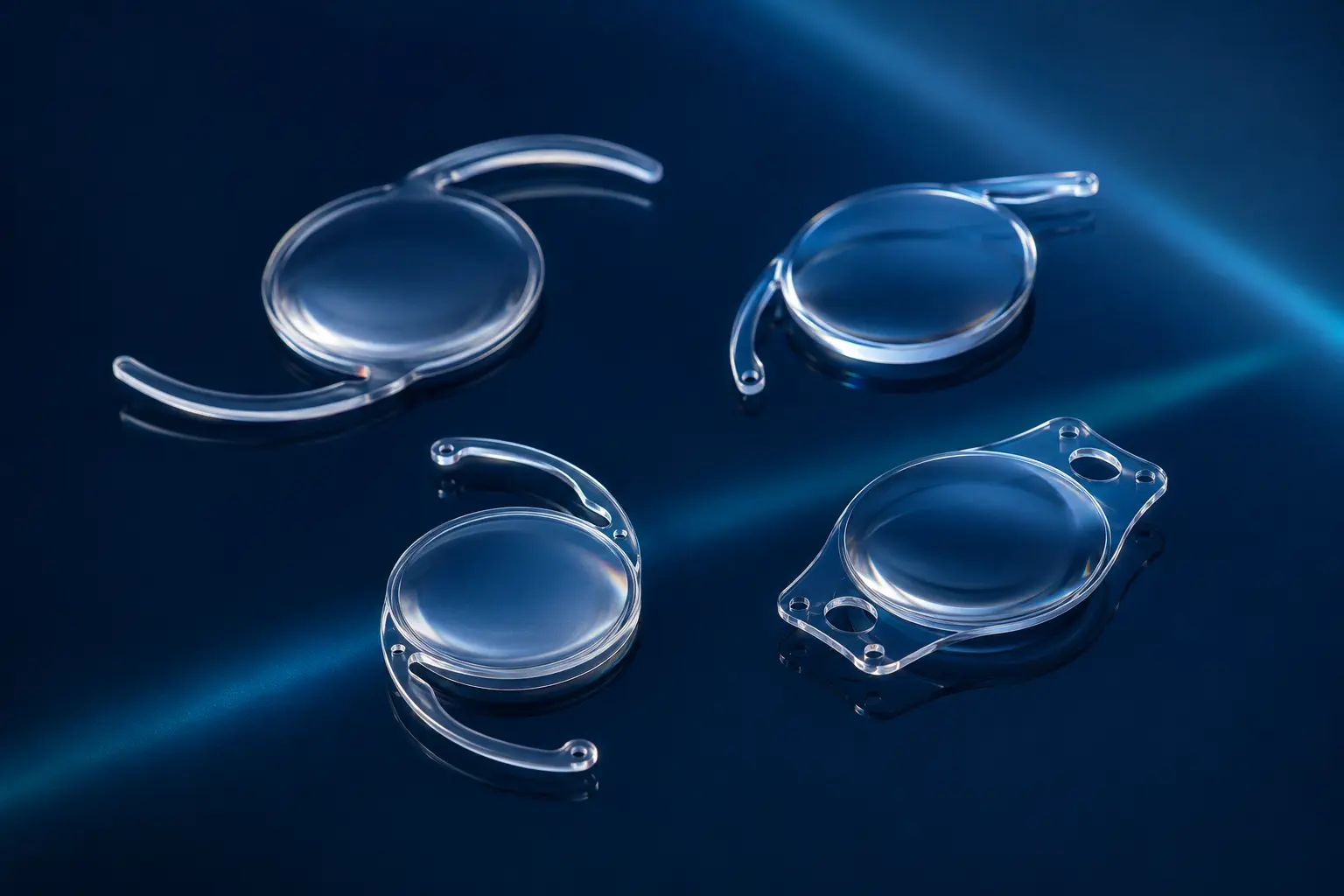
LASIK changes corneal curvature by removing a calculated amount of stromal tissue. ICL places a phakic lens inside the eye, usually behind the iris and in front of the natural lens, without removing the natural lens.
ICL can later be removed or exchanged, but ‘reversible’ should not be confused with consequence-free. It remains intraocular surgery and removal cannot guarantee a return to the exact preoperative state.
Who may lean toward LASIK?
LASIK may be appropriate when the prescription is stable, tomography is reassuring, tissue calculations are acceptable and the ocular surface is controlled. It avoids an implant and routine long-term monitoring of lens position or vault.
Very high corrections may remove more corneal tissue and can have less predictable optical quality. The treatment range is therefore not just what the laser can enter; it is what the eye can safely support.
Who may lean toward ICL?
ICL may be considered for moderate or high myopia, thin but otherwise healthy corneas, or eyes where corneal laser would remove too much tissue. It can preserve corneal shape and may offer strong optical quality in large corrections.
Suitability requires adequate anterior-chamber anatomy, endothelial health, careful sizing and a healthy natural lens and retina. High myopia itself carries retinal risks that ICL does not remove.
Comparing risks
LASIK risks include dryness, visual symptoms, flap complications and ectasia. ICL risks include infection, inflammation, raised pressure, cataract formation, endothelial cell loss, rotation in toric lenses, vault problems and the possibility of additional intraocular surgery.
The severity, probability and treatability of risks differ. A simple list of advantages without explaining the intraocular nature of ICL is incomplete consent.
Age and the natural lens
In a young adult, preserving the natural lens retains accommodation. As age increases and presbyopia or early cataract develops, a phakic ICL may offer less strategic value and lens-based options may enter the discussion.
Refractive lens exchange removes accommodation and carries retinal considerations, particularly in high myopia. Age alone does not select the operation; lens clarity and visual goals are central.
The measurements that decide
Laser planning uses refraction, tomography, pachymetry, optical zone and residual-tissue calculations. ICL planning adds anterior-chamber depth, white-to-white or angle measurements, endothelial cell count and lens-sizing data, along with retinal examination when indicated.
If both options are reasonable, the patient’s priorities can guide the decision. If one fails the safety assessment, preference should not override anatomy.
Useful questions for your consultation
Use these prompts to keep the discussion connected to your measurements, risks and visual goals.
- How much corneal tissue would laser remove?
- Are my chamber depth and endothelial count suitable for ICL?
- How will lens sizing and vault be checked?
- How does my age affect the long-term plan?
Frequently asked questions
Is ICL only for extremely high myopia?
No, but it is especially useful when prescription or corneal calculations make laser less attractive. Regulatory ranges vary by lens model.
Can an ICL be removed?
Usually yes, but removal is another operation and does not make implantation risk-free.
Which has faster recovery?
Both can recover quickly in uncomplicated cases. The monitoring and risk profiles differ more importantly than a day-by-day race.
Does ICL stop retinal detachment risk from high myopia?
No. It corrects focus but does not shorten the eye or remove retinal risks associated with high axial myopia.
Medical sources and further reading
This article was reviewed against the following patient-information resources. Individual recommendations still depend on examination.
- U.S. FDA — Phakic intraocular lens risks
- National Eye Institute — Cataracts and intraocular lenses
- American Academy of Ophthalmology — Cataract surgery
- Alcon — Cataract lens portfolio
- Johnson & Johnson Vision — TECNIS Eyhance
- Johnson & Johnson Vision — TECNIS PureSee
- Bausch + Lomb Surgical — Cataract portfolio