
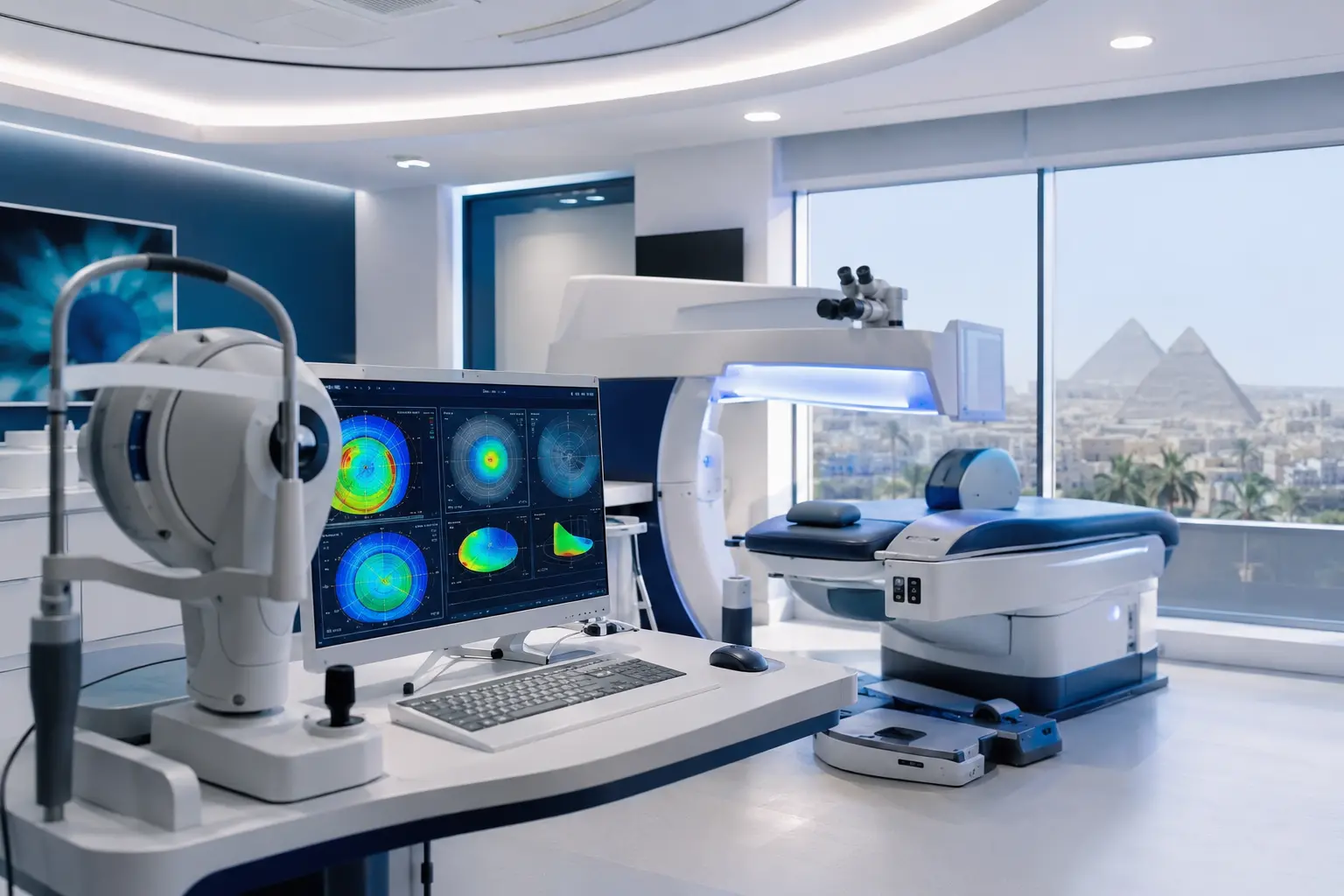
Can a screen move the LASIK flap?
Looking at a phone or computer does not physically move the flap. Rubbing or squeezing the eye, direct trauma and failure to follow postoperative instructions are more relevant mechanical concerns. The problem with screens is mainly comfort and visual quality.
Concentrated viewing reduces blink frequency and increases tear evaporation. An unstable tear film can cause blur, burning, heaviness or a need to blink repeatedly to clear the image.
The day of surgery
Use the first hours for rest with the eyes closed. This reduces discomfort and the temptation to touch the eyes. Arrange any essential calls, transport and medication reminders in advance so you do not need to stare at a screen immediately after treatment.
If you briefly need the phone, increase text size, reduce glare and stop when symptoms increase. Do not use screen tolerance as proof that it is safe to drive or return to full work.
Returning to computer work
After LASIK, many patients can perform short periods of desk work within the first few days, depending on comfort and the postoperative check. TransPRK usually requires more time because epithelial healing causes blur and light sensitivity.
Build up in blocks rather than starting with a full working day. Place the monitor slightly below eye level, avoid direct airflow from air-conditioning and keep prescribed lubricants accessible.
- Start with short sessions
- Blink deliberately
- Look into the distance during breaks
- Increase text size instead of leaning forward
- Stop if pain or substantial blur develops
The 20-20-20 rule—useful, not magical
Looking away regularly can relax sustained near focus and reminds you to blink, but no exact interval guarantees comfort. A practical approach is to pause before symptoms start, close the eyes briefly and use lubricants according to the plan.
The quality of the room matters too. Reduce reflections, avoid an excessively bright screen in a dark room and keep a comfortable working distance.
When screen blur is not just dryness
Mild blur that clears after blinking often points toward the tear film. Persistent focal blur, increasing pain, redness, discharge, strong light sensitivity or a sudden change deserves prompt examination.
Do not increase medicated drops or reuse old prescriptions without speaking to the clinic. Steroids and antibiotics have specific schedules and risks; lubricants do not substitute for a postoperative check.
Frequently asked questions
Can I watch television after LASIK?
Brief viewing is generally possible when comfortable, but rest is preferable during the first hours and dryness may limit viewing time.
Do blue-light glasses help LASIK healing?
They do not heal the flap or cornea. Screen comfort is better addressed with breaks, blinking, suitable lighting and prescribed lubrication.
Why does my screen become clearer after blinking?
Blinking temporarily restores a smoother tear film. Repeated fluctuation should be discussed during follow-up.
Medical sources and further reading
This article was reviewed against the following patient-information resources. Individual recommendations still depend on examination.